The Ghepan Lake trek is a demanding, high-altitude day hike from the Sissu area up to a sacred glacial lake widely reported at around 3,900–4,100 m — a summer-only trek that rewards you with one of Lahaul’s most striking alpine lakes, but one you should only attempt with a local guide, proper acclimatisation and the right weather window. It is the region’s most famous high-altitude walk, and it is a serious one: long, steep and remote, not a casual afternoon stroll.
What is Ghepan Lake?
Ghepan Lake — also spelled Ghepan Ghat Lake — is a high glacial lake set in the mountains above the Lahaul valley, fed by snow and ice melt from the peaks that ring it. It sits at an altitude widely reported as roughly 3,900–4,100 m, well above the valley floor where Sissu and our hotel sit at about 3,100 m. On a clear summer day the water holds an intense blue-green, framed by bare rock and lingering snow, and the silence up there is complete.
The lake is not just scenery, though — it is genuinely sacred to the local people. It is closely tied to Gyephang (also written Ghepan), the presiding mountain deity of Lahaul, whose towering peak watches over the whole valley. Local belief treats the lake and its surroundings with deep reverence, so trekkers are asked to behave respectfully: do not litter, do not disturb the water, and follow whatever your guide tells you about local custom. If you would like to understand the deity a little before you go, our guide to the Raja Gyephang temple gives useful background on why this figure matters so much across Lahaul.
The trek at a glance
In plain terms, this is a full-day, high-altitude climb from the Sissu area up to the lake and back. The trail starts from around Sissu on the valley floor and gains well over 800–1,000 m of height to reach the lake basin. The distance is often described as approximately 10–14 km one way depending on exactly where you start and the route your guide takes — we will not pretend to a false-precise figure here, because the ground, the start point and the season all move the numbers.
What is not in doubt is the character of the day. It is long, steep and unrelenting in places, on rough mountain ground with no shops, no shelter and patchy phone signal once you leave the village. Most groups treat it as a very early start and a long day out, and fit, well-acclimatised trekkers may prefer to break it with a night higher up rather than push the whole thing in one go. Either way, it is a proper expedition day, not a viewpoint stroll like the gentle walks in our treks near Sissu guide.
Route & what to expect
The walk begins gently enough on the valley floor near Sissu before the real climbing starts. From there the trail rises steadily through open mountainside — grassy slopes and grazing meadows lower down, giving way to bare rock, boulder fields and snow patches as you gain height toward the lake basin. Streams of glacier melt cross the path in places, and the higher you go, the thinner the air and the bigger the sky.
Expect the terrain to be faint and unmarked for long stretches. There are no signposts and no fixed café stops; the route is read from the land, which is exactly why a local guide matters so much up here. The reward comes near the top, when the ground levels into the basin and the lake finally appears — still, glacier-fed and framed by the high peaks, with the Gyephang massif presiding over it all. Most people spend a short while at the lake, take it in, and turn back with plenty of daylight in hand, because afternoon weather in these mountains can change fast.
Because the exact line, the snow cover and the safe turnaround point all shift through the season, the sensible approach is to plan the day with a guide who has walked it recently rather than following a fixed script from the internet. Conditions this week decide the route, not last year’s photos.
Difficulty, altitude & who it suits
Let us be honest about this: the Ghepan Lake trek is hard. It combines a long distance, sustained steep climbing and serious altitude, and it suits only trekkers who are genuinely fit and already acclimatised. If you have arrived in Lahaul in the last day or two straight from the plains, you are not ready for it — and pushing on regardless is how people get into trouble.
The single biggest risk is altitude. Sissu itself sits at about 3,100 m, high enough that many visitors feel mild effects — headache, breathlessness, poor sleep — in their first day or two. The lake is several hundred metres higher again, deep into the zone where Acute Mountain Sickness (AMS) becomes a real danger. The right sequence is to acclimatise properly at the ~3,100 m base first, spend a couple of easy days at valley level, and only then attempt the climb. If you feel unwell as you gain height, the rule is simple and non-negotiable: turn back and come down. Our Sissu altitude & AMS guide explains the warning signs in full, and it is essential reading before you commit to this trek.
In short, this is a walk for experienced, well-prepared hill walkers with a guide — not for young children, not for anyone with heart or breathing conditions without medical advice, and not for first-day arrivals. If that is not you this trip, Sissu still has plenty to offer at a gentler pace: see our things to do in Sissu and organised adventure activities for lower-effort ways to enjoy the valley.
Best season to trek
Ghepan Lake is a summer-only trek. The window runs roughly from June through to September or early October, when the snow has retreated enough to make the higher ground walkable and the weather is at its most settled. Through the deep cold the whole route is snowbound and effectively closed — the lake freezes, the trail vanishes under snow, and attempting it in winter is simply not sensible.
Even within the summer window, conditions vary. Early in the season the higher slopes can still hold snow and ice in shaded gullies, while late in the window the nights sharpen and the first fresh snow can arrive on the tops. The most reliable stretch is usually mid-summer into early autumn, but the honest answer is that the right week depends on the year, so check with someone on the ground before you fix dates. For the month-by-month picture of the whole valley, our best time to visit Sissu guide sets the context, and our travel desk can tell you how the high ground is looking for your specific dates.
What to pack & safety
Pack as you would for a serious high-altitude day, because that is what this is. The weather can turn from sun to cold wind and cloud in minutes, and there is nothing to buy once you leave the village. The essentials:
- Proper boots — sturdy, broken-in walking boots with real grip; the ground is rough, stony and often wet or snow-patched.
- Warm layers & a shell — a warm mid-layer plus a windproof, waterproof jacket, even on a clear morning, as the tops are far colder and breezier than the valley.
- Sun protection — the high-altitude sun is fierce; take sunscreen, sunglasses and a cap, plus lip balm for the dry air.
- Plenty of water and food — carry more than you think, with high-energy snacks for the long day.
- A small first-aid kit and any personal or altitude medication.
- An early start — set off at first light so you are heading down well before the afternoon weather builds.
Above all, treat the mountain with respect. Do not go alone, tell someone your plan and rough return time, do not push through altitude symptoms, and turn back without ego if the weather or the clock says so — the lake will be there another year. For a full season-by-season checklist, see our what to pack for Sissu guide.
How we help
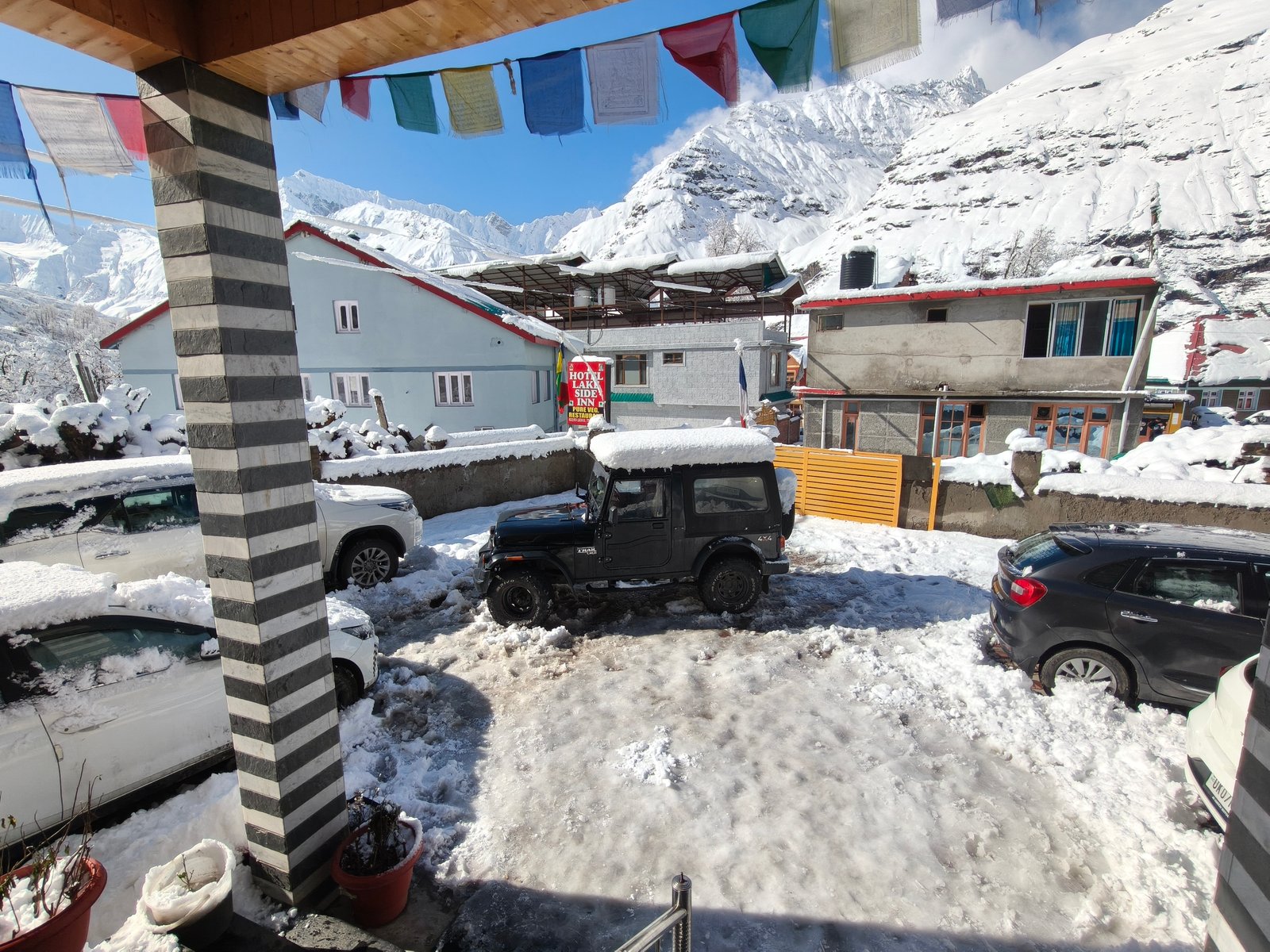
We cannot make the trek easy — nobody can — but we can make it far safer and simpler to organise, because we are based right where it starts. Hotel Lake Side Inn sits on the Sissu valley floor at about 3,100 m, a 2-minute walk from Sissu Lake and the waterfall, which makes us an ideal base to rest and acclimatise for a day or two before you attempt the climb. Warm, comfortable nights matter before a big day out, so our mountain-view rooms come with room heaters, 24×7 hot water and a 100% pure-veg kitchen to fuel you properly.
Just as importantly, our travel desk can help you arrange a reliable local guide for the trek and give you an honest read on whether the high ground is in condition for your dates — we would far rather tell you to wait a week than send you up in the wrong conditions. Getting here is straightforward too: Sissu is about 12 km from the Atal Tunnel north portal and roughly 38–40 km (around 1–1.5 hours) from Manali, as our how to reach Sissu guide explains. One practical note before you drive up: there is no petrol pump in Sissu, so fill up in Manali before you cross — the next pump is at Tandi. When you are ready to plan it, call or WhatsApp us on +91 82193 15303 and we will help you build the trip around the trek.
Frequently Asked Questions
How difficult is the Ghepan Lake trek?
It is a demanding, high-altitude trek — long, steep and on rough, unmarked ground, climbing from the Sissu area at ~3,100 m up to a lake widely reported at around 3,900–4,100 m. It suits only genuinely fit trekkers who have already acclimatised, and it should be done with a local guide. It is not a casual walk.
How high is Ghepan Lake and how long is the trek?
The lake is widely reported at approximately 3,900–4,100 m, and the trek is often described as roughly 10–14 km one way depending on your start point and route. Treat these as approximate figures — the exact distance and line vary with the season and where the walk begins, so plan the day with a guide who knows current conditions.
Do I need a guide for the Ghepan Lake trek?
Yes. The trail is faint and unmarked, the altitude needs careful judgement, snow lingers in shaded ground and phone signal is patchy, so going alone is a real risk. A local guide handles route-finding, reads the weather and knows the safe turnaround point. Our travel desk can help arrange a reliable one.
What is the best season for the Ghepan Lake trek?
It is a summer-only trek, roughly June to September or early October, when the snow has retreated and the weather is most settled. Through winter the route is snowbound and effectively closed. Even in summer, conditions vary year to year, so check with someone on the ground before fixing your dates.
Is Ghepan Lake sacred?
Yes. The lake is sacred to the local people and closely tied to Gyephang (also written Ghepan), the presiding mountain deity of Lahaul. Trekkers are asked to treat it with respect — do not litter or disturb the water, and follow your guide on local custom. Our Raja Gyephang temple guide gives background on the deity.
Can beginners do the Ghepan Lake trek?
It is not a beginner trek. The combination of long distance, sustained steep climbing and serious altitude makes it unsuitable for first-day arrivals, young children or anyone unfit or with heart or breathing conditions without medical advice. If it is beyond you this trip, Sissu still has easy valley walks and gentler activities to enjoy.
Base yourself in Sissu before the climb
Rest and acclimatise a 2-minute walk from Sissu Lake — mountain-view rooms with heaters, 24×7 hot water, a pure-veg kitchen and a travel desk that can help arrange a local guide. Book direct for our best rate.