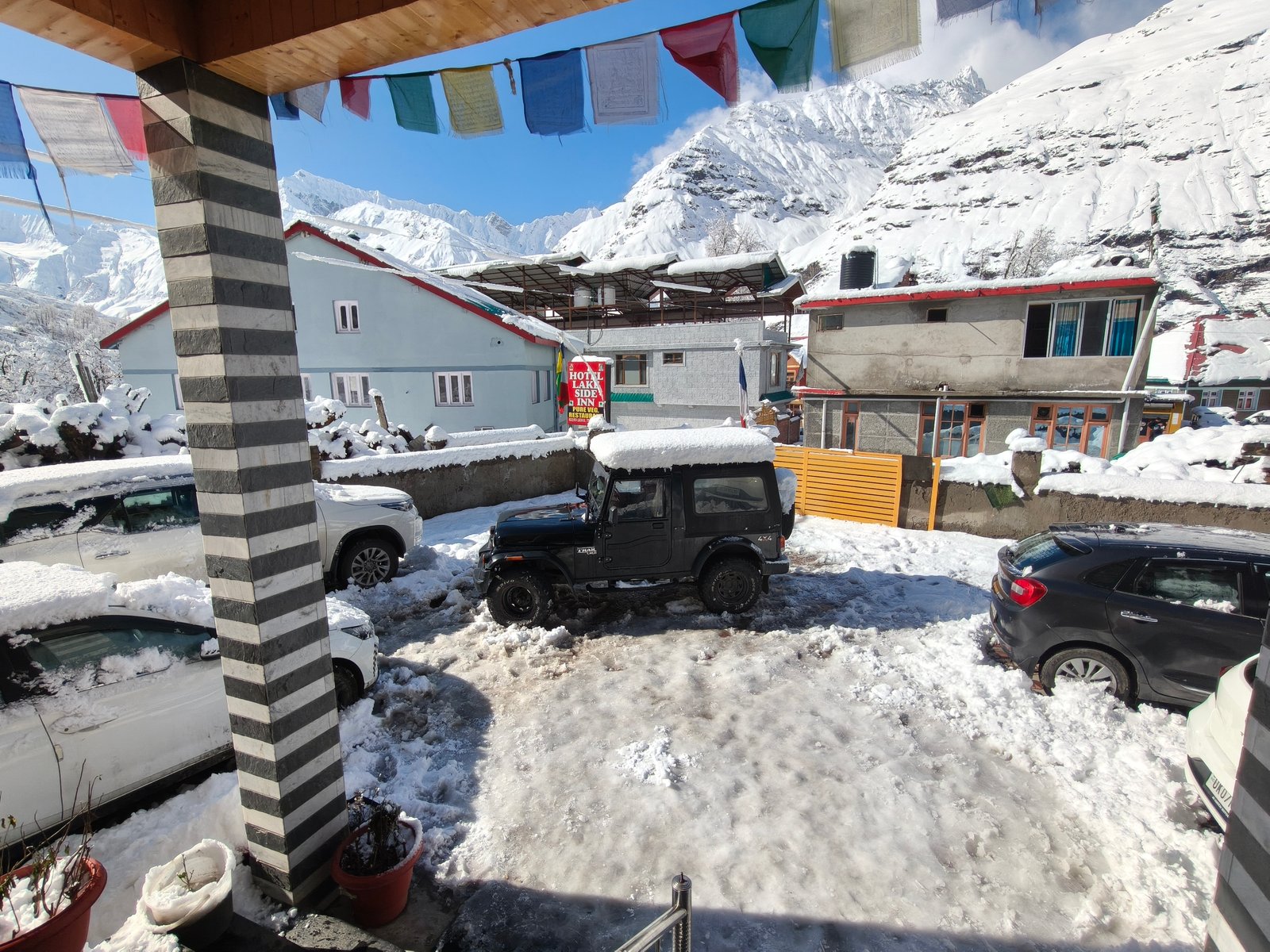
Sissu sits at about 3,100 m (10,170 ft) in the Lahaul valley. For most healthy travellers the risk of altitude sickness (AMS) here is low to moderate, and the gentle drive in through the Atal Tunnel makes it easier than it used to be. The large majority of visitors feel perfectly fine.
How high is Sissu?
Sissu (also written Khoksar-side Khwaling) lies on the valley floor of Lahaul, on the right bank of the Chandra river, at roughly 3,100 metres — about 10,170 feet above sea level. Different sources put it anywhere from about 3,100 m to 3,120 m, but for planning purposes it is fair to think of Sissu as a ~3,100 m mountain village.
To put that in everyday terms: Sissu is noticeably higher than Manali (~2,050 m), similar in feel to many popular Himalayan hill stays, and clearly lower than the big high-altitude destinations like Leh (~3,500 m) or the high passes and lakes further on. It is high enough that the air is thinner than on the plains, but not so high that a healthy traveller should expect trouble. The other thing that helps is how you arrive: since the Atal Tunnel opened, you reach Sissu without crossing the old, much higher Rohtang Pass — a gentler, more gradual approach that is kinder to your body.
Will you get altitude sickness in Sissu?
For most healthy travellers, no — or at worst only mild, short-lived effects on the first day. Acute Mountain Sickness (AMS) becomes a real concern as you go higher, and at around 3,100 m Sissu sits in a band where the risk is genuinely low to moderate rather than high. Plenty of families, couples and older guests stay with us every season and feel completely fine.
A few honest caveats. People who come up very fast from the plains — for example flying into Chandigarh or Delhi and driving straight up the same day — are the ones most likely to feel a mild headache or poor sleep the first night, because the body simply has not had time to adjust. Breaking the journey for a night in Manali before continuing to Sissu makes a real difference. The good news is that even when mild symptoms do appear, they usually settle within a day as you acclimatise, especially if you rest, hydrate and take it easy.
Symptoms to watch for
Mild AMS often feels a bit like a hangover. The common early symptoms are:
- Headache — the most typical sign, often worse in the evening or overnight.
- Nausea or loss of appetite.
- Dizziness or light-headedness.
- Fatigue and a general feeling of being “off”.
- Breathlessness on mild exertion, such as walking uphill or up stairs.
- Poor or broken sleep on the first night.
These mild symptoms are common, usually settle as you acclimatise, and are not dangerous on their own. What matters is keeping an eye on whether they improve or get worse. Warning signs that need to be taken seriously include a severe headache that does not ease with rest and water, repeated vomiting, confusion or unsteadiness on your feet, and significant breathlessness even at rest. If those appear, do not wait it out — act on the advice in the note below.
How to prevent AMS
Most altitude trouble is avoidable with a few simple habits, and they cost nothing:
- Ascend gradually. Where you can, spend a night at a middle altitude like Manali before coming up to Sissu rather than racing up from the plains in one go.
- Hydrate well. Drink plenty of water through the day; the dry mountain air dehydrates you faster than you expect.
- Take it easy on day one. Avoid heavy exertion, long hikes or strenuous activity for the first 24 hours — let your body settle in first.
- Avoid alcohol (and go easy on heavy, rich meals) on your arrival day, as they make altitude effects worse and mask early symptoms.
- Rest and sleep. A relaxed first evening and a good night’s sleep do more than any gadget to help you acclimatise.
- Listen to your body, and descend if symptoms worsen. The single most reliable treatment for altitude sickness is going down to a lower altitude — towards Manali, in our case.
Some altitude-sensitive travellers ask about medication. Diamox (acetazolamide) is a prescription medicine sometimes used to help with altitude — but it is not something to self-prescribe. If you have had altitude problems before or are worried, ask your own doctor about it before the trip; only take it on their advice. Our Sissu packing guide covers the basic medicines worth carrying.
Higher trips that need real caution
Here is the honest part: Sissu itself is the easy bit — the real altitude risk is on the side-trips beyond it. Sissu is often used as a base for going much higher, and those destinations are a different game altogether.
The classic example is Chandratal Lake, which sits at around 4,300 m (~14,100 ft), reached via the Kunzum Pass at roughly 4,500 m. That is more than a kilometre higher than Sissu, and AMS at that altitude is a genuine, common concern even for fit travellers. The sensible approach is to acclimatise at Sissu for a day or two first, go up well-rested and hydrated, keep your time at the very top reasonable, and be ready to turn back if anyone in the group feels unwell. Treat any high lake, high pass or high-altitude camp the same way: respect the height, don’t rush it, and never push on with worsening symptoms.
Who should be extra careful
While Sissu is comfortable for the great majority of visitors, a few groups should take extra care and ideally talk to a doctor before travelling:
- Infants and very young children — they can’t always tell you how they feel, so watch them closely.
- Elderly travellers — usually fine, but worth a gentler, slower itinerary.
- Anyone with a heart or lung condition, uncontrolled blood pressure, severe anaemia, or other oxygen-related issues — please get medical clearance first.
- People who have had AMS before, or struggle at altitude generally — plan a slower ascent and discuss prevention with your doctor.
None of this means these travellers can’t enjoy Sissu — many do. It simply means planning a relaxed pace, building in rest, and getting personalised advice from your own doctor, who knows your medical history. If you have specific worries about a guest’s health, our families and kids safety guide may help, and you are always welcome to contact us with questions before you book.
Frequently Asked Questions
How high is Sissu?
Sissu sits at roughly 3,100 metres (about 10,170 feet) above sea level, on the valley floor of Lahaul beside the Chandra river. Some sources cite figures a little higher (around 3,120 m), but for planning you can think of Sissu as a ~3,100 m mountain village — higher than Manali, but well below big high-altitude spots like Leh.
Will I get altitude sickness in Sissu?
For most healthy travellers, no. At ~3,100 m the AMS risk at Sissu is low to moderate, and the gradual approach through the Atal Tunnel (no high Rohtang Pass to cross) makes it easier on your body. Those who race up from the plains in one day may feel a mild headache or poor sleep the first night, but it usually settles within a day with rest and water.
Is Sissu safe for people with low oxygen issues?
Sissu is comfortable for the great majority of visitors, but anyone with a heart or lung condition, breathing problems or other oxygen-related issues should consult their own doctor before travelling and plan a gentle, well-rested pace. The same goes for infants, the elderly and anyone who has had altitude sickness before. We are happy to help arrange a local doctor if needed.
Do I need Diamox for Sissu?
Most visitors to Sissu do not need any altitude medication. Diamox (acetazolamide) is a prescription medicine sometimes used for altitude, but it should never be self-prescribed. If you are altitude-sensitive or have had AMS before, ask your own doctor about it in advance and only take it on their advice.
Is Sissu higher than Manali or Leh?
Sissu (~3,100 m) is higher than Manali (~2,050 m) but lower than Leh (~3,500 m). That middle position is part of why Sissu feels manageable for most travellers — high enough for thinner mountain air, but not as demanding as the highest Himalayan destinations.
What should I do if I feel sick at altitude in Sissu?
For mild symptoms (headache, tiredness, poor sleep), rest, drink water, avoid alcohol and exertion, and give your body a day to adjust — most cases settle on their own. If symptoms worsen — severe headache, repeated vomiting, confusion or breathlessness at rest — descend toward Manali and seek medical help. The nearest hospital is at Keylong (~30 km), and we can help you contact a local doctor.
Make Sissu your home for a few days
Cosy mountain-view rooms, 24×7 hot water and a pure-veg kitchen — a 2-minute walk from Sissu Lake. Book direct for our best rate.