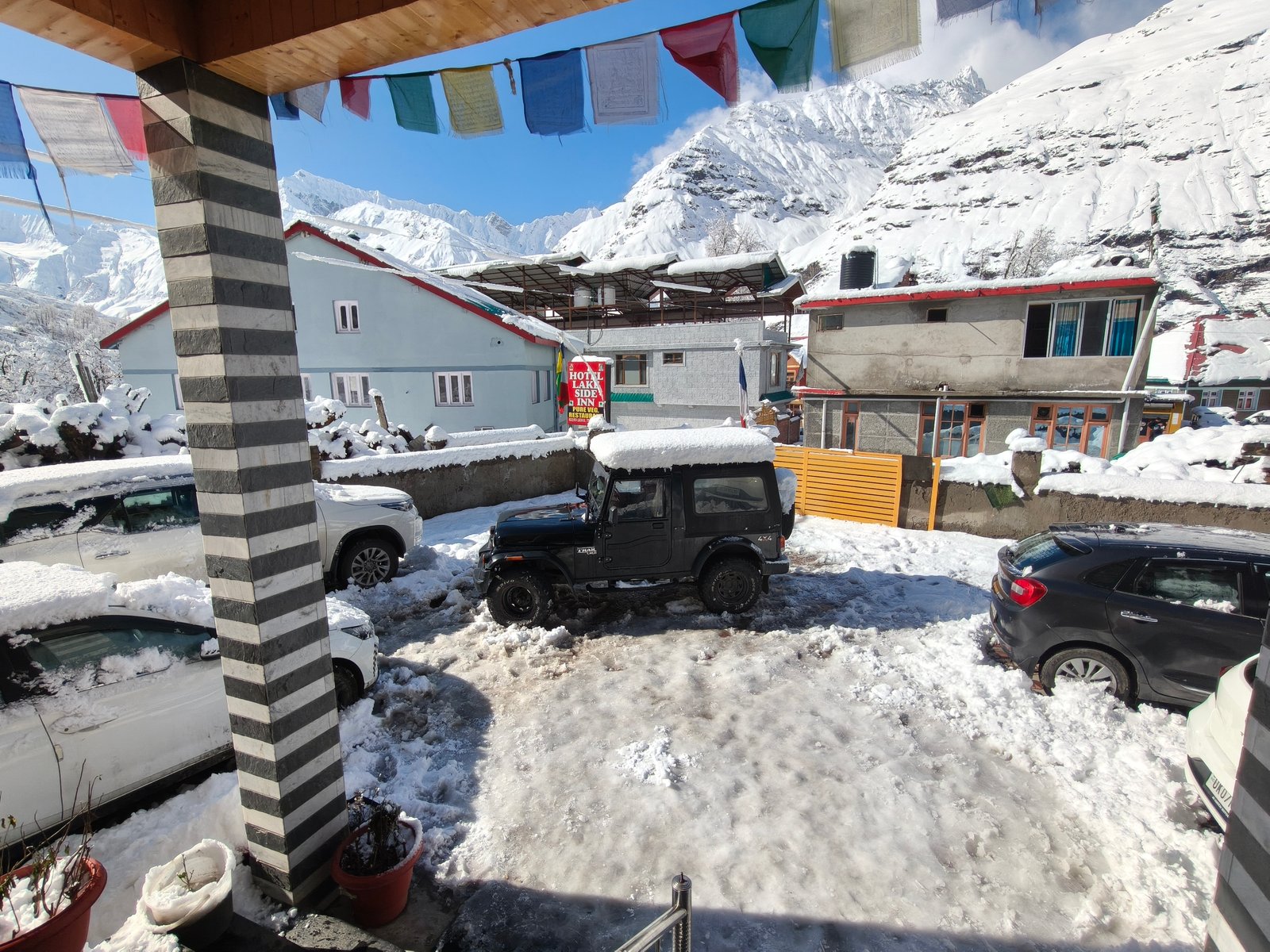
The best time to visit Sissu is May to June for pleasant weather, open roads and a green valley, and December to February if you want deep snow and a frozen waterfall. For clear skies, golden light and fewer crowds, come in September and October — the quiet, best-value window.
Quick answer: when should you visit Sissu?
Sissu sits at roughly 3,100 m (about 10,170 ft) on the floor of the Lahaul valley, just ~12 km north of the Atal Tunnel. That altitude is the single most important thing to understand: even in mid-summer the nights are cool, and from December the whole valley turns to snow. So the “best” time genuinely depends on what you came for.
If you want warm, easy travel with everything open, aim for May and June. If snow is the whole point — snowball fights, a white valley, the frozen Sissu waterfall — come in December or early-to-mid winter, but plan around the valley’s winter tourism break. If you want the best light and the best value, September and October are quietly the sweet spot. Whatever month you pick, it’s worth checking whether Sissu is open right now before you lock in non-refundable travel.
Best season overall
For most first-time visitors, May to June is the easiest and most rewarding window. Days are pleasant — broadly in the ~10–25°C range — the Manali approach and the Atal Tunnel are fully open, the meadows are green, and Sissu Lake and the waterfall are at their liveliest with snowmelt. It is also the most popular time, so rooms fill early; book ahead.
The under-rated alternative is September to October. The monsoon has passed, the air is crisp and clear, the valley turns golden, and crowds thin out noticeably — which usually means better value too. You still get blue-sky days and you can comfortably do all the main things to do in Sissu without the peak-season rush. The trade-off is that nights get cold quickly as October moves on, and the first snows can arrive late in the month.
Sissu in winter (snow)
Winter is when Sissu looks like a postcard. From December through February the valley is under snow, the lake often freezes, and the Sissu waterfall (Palden Lhamo Dhar) turns into a frozen column of ice — the single most photographed winter sight here. Daytime temperatures hover around freezing and nights can drop to about –15°C, so this is a trip for people who genuinely enjoy the cold and come prepared.
The Atal Tunnel keeps Sissu reachable in winter in a way it never was before the tunnel opened, but winter access is still weather-dependent: after fresh snowfall the highway can be closed for clearing, and you should always travel with buffer days.
The practical upshot: for snow with the fewest restrictions, December and early-to-mid January tend to be the safest bet, while late January and February are the most likely to face limits. Read our live Sissu open status page for the current year.
Sissu in summer (peak)
“Summer” in Sissu does not mean hot. Because of the altitude, even peak-season afternoons in May and June stay comfortable rather than warm, and evenings are cool enough for a light jacket. This is exactly why it’s popular — people come up from the heat of the plains and Manali into clean, cool mountain air, with the bonus that every road, café and viewpoint is open.
It’s also the simplest time to reach Sissu from Manali: the ~38–40 km drive through the Atal Tunnel takes roughly 1–1.5 hours and the route is reliably clear. The only real downside of peak season is company — expect more vehicles, more visitors at the lake, and rooms booking out, so reserve well in advance.
Monsoon & shoulder months
Monsoon (July – August): Here’s a quirk in your favour — Lahaul sits in a relative rain-shadow, so Sissu itself stays comparatively dry while the rest of the Himalayas get drenched. The catch is the approach: the Manali side is firmly in the monsoon, and the road up can face landslides, slips and delays. Sissu can be lovely and green in these months, but only travel with flexible plans and after checking road status — never on a tight, fixed schedule.
Shoulder months (March – April): This is the melting-snow season — snow on the valley floor recedes while the peaks above stay brilliantly white, which photographs beautifully. Crowds grow through April as the season opens up. Weather is changeable: warm in the sun, cold in the shade, with the odd late-season snow spell, so pack for both.
Sissu month by month
Here’s the whole year at a glance. Temperatures are typical ranges for the valley floor and will vary year to year, so treat them as a guide rather than a forecast.
| Month | Weather / Temp | Snow & roads | Good for |
|---|---|---|---|
| January | Coldest month; days near freezing, nights to ~–15°C | Deep snow, frozen waterfall; highway open but closures after fresh snow; restrictions possible late month | Snow lovers, frozen-waterfall photos (early Jan safest) |
| February | Very cold, days near or below freezing | Heavy snow; tourist-movement restrictions often still in effect this month | Snowscapes if open — confirm with the hotel first |
| March | Cold, warming slowly; sharp day–night swing | Snow melting on the floor, peaks still white; access improving | Snowcapped views with fewer crowds |
| April | Cool, pleasant in the sun; chilly nights | Mostly clear roads; occasional late snow | Shoulder-season trips, photography |
| May | Pleasant, ~10–25°C days | Roads fully open; green valley | Peak season — easy travel, lake & waterfall |
| June | Warmest, pleasant days; cool evenings | All open; busiest period | First-timers, families (book early) |
| July | Mild; Sissu relatively dry (rain-shadow) | Approach via Manali can face landslides/delays | Green valley — only with flexible plans |
| August | Mild and green; cool nights | Same monsoon caution on the Manali approach | Quiet greenery; check road status first |
| September | Crisp, clear, comfortable days | Post-monsoon; roads reliable | Best value — clear skies, fewer crowds |
| October | Cool days, cold nights; golden light | Mostly clear; first snows possible late month | Photography, quiet trips, autumn colour |
| November | Cold, dropping fast; early snow likely | Snow begins; access starts to depend on weather | Early-winter feel before the crowds |
| December | Cold; days near freezing, sub-zero nights | Snow established; waterfall starts to freeze; closures after snowfall | Snow with the fewest restrictions |
What to pack
Whatever the month, Sissu’s altitude means cool evenings — pack a layer even in June. Tailor the rest to your season:
- May – June: light layers, a fleece or jacket for evenings, sunglasses, strong sunscreen (UV is intense at altitude), comfortable shoes and a light rain layer.
- September – October: a warm jacket, thermals for the night, a beanie and gloves as October progresses.
- December – February: serious cold-weather kit — heavy insulated jacket, thermals, waterproof snow boots with grip, woollen cap, gloves, and a power bank (batteries drain fast in the cold).
- All year: any personal medication, a basic first-aid kit, and a few buffer days in your itinerary in case roads close.
Our rooms come with 24×7 hot water and warm bedding, which makes the cold months a lot more comfortable — see our rooms for what’s included. Guests rate us 4.8/5, and a big part of that is honest, on-the-ground advice on exactly this kind of timing.
Frequently Asked Questions
When does it snow in Sissu?
Sissu usually sees its first snow around late November or December, with the heaviest, most reliable snow through January and February. The valley typically stays under snow until it begins melting in March. For deep snow with the fewest access restrictions, December and early-to-mid January are the safest window.
Is Sissu worth visiting in summer?
Yes. In May and June, Sissu offers pleasant ~10–25°C days, a green valley, a lively lake and waterfall, and fully open roads — it is the easiest time to visit. The only trade-off is crowds, so book your room well in advance.
Is Sissu open in January?
Generally yes in early-to-mid January, and the Atal Tunnel keeps the route open, but tourist movement can be restricted later in the month. In recent years authorities have limited tourist activity in Lahaul for roughly 40 days from around late January. Always confirm the current status with us on +91 82193 15303 before booking.
What is the cheapest time to visit Sissu?
September and October are typically the best value. The monsoon has passed, skies are clear, crowds thin out after the peak-season rush, and you can do everything without the May–June pressure on rooms.
How cold does Sissu get?
At about 3,100 m, Sissu is cold in winter: December to February days hover around freezing and nights can drop to roughly –15°C. January is the coldest month. Even in peak summer, evenings stay cool enough for a jacket.
Which is the best month for the frozen waterfall?
January is the most reliable month to see the Sissu waterfall (Palden Lhamo Dhar) frozen solid, with December a strong second. Because late January and February can bring tourist restrictions, early January is often the best balance of a fully frozen fall and open access.
Make Sissu your home for a few days
Cosy mountain-view rooms, 24×7 hot water and a pure-veg kitchen — a 2-minute walk from Sissu Lake. Book direct for our best rate.