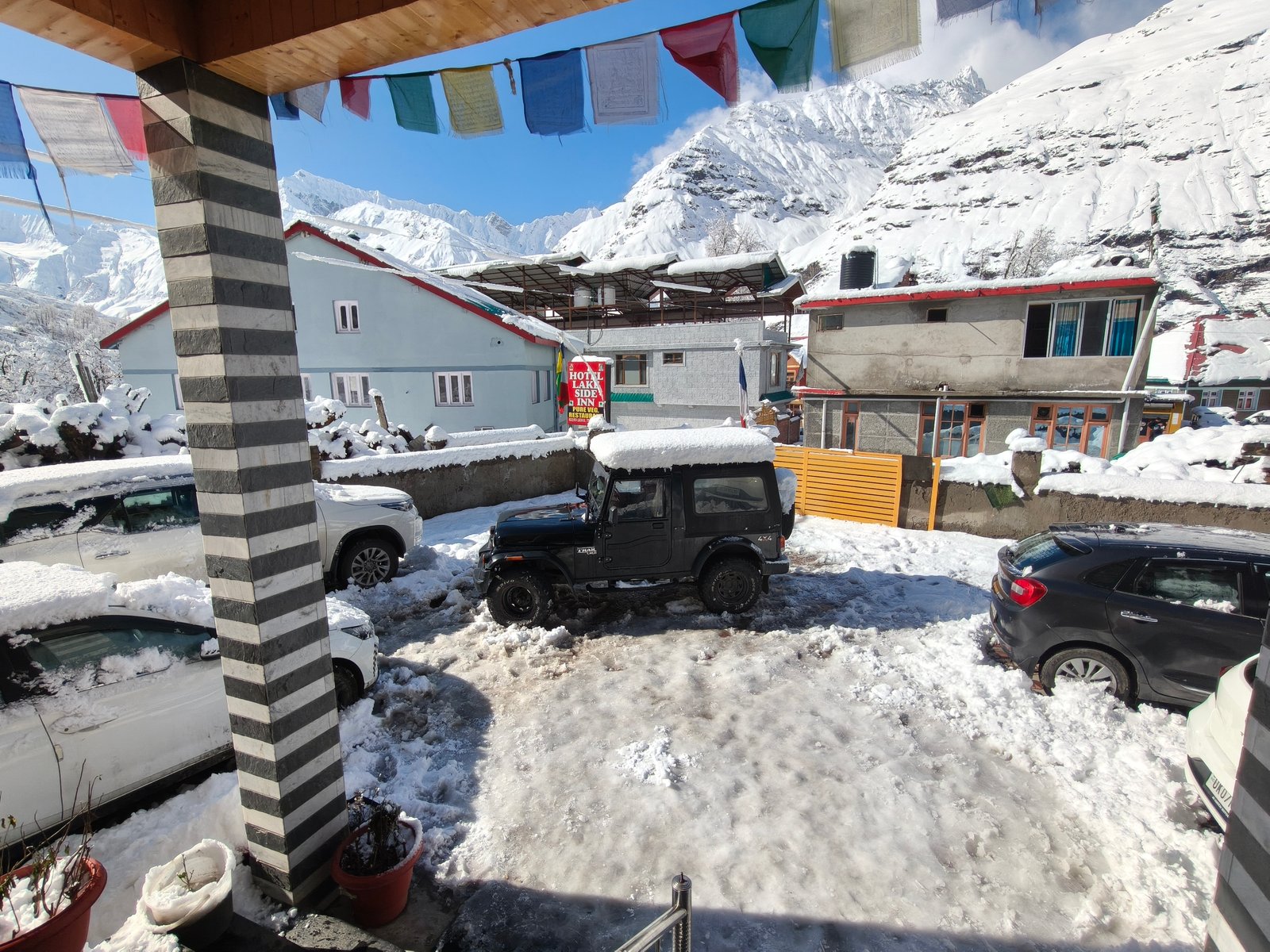
Sissu in July is green, mild and surprisingly pleasant — and because Lahaul sits in the Himalayan rain-shadow, it stays noticeably drier than rain-soaked Manali. The real July catch is not Sissu itself but the Manali-side approach, where monsoon landslides can cause delays. Plan a buffer day, check the road before you set off, and it makes a lovely, uncrowded trip. As hosts who watch this valley and the highway every day, here is the honest picture.
July weather in Sissu
July is high summer in Lahaul, and Sissu wears it well. At an altitude of around 3,100 m, the valley never gets hot the way the plains do. Daytime temperatures usually sit in a comfortable ~15–22°C range — warm enough for a single layer while you are walking in the sun, cool enough that you never feel sticky. The light is long and generous, with the sun up early and dusk stretching past 7 pm.
Nights are a different story, and this is the part visitors most often underestimate. Once the sun drops behind the ridgeline, temperatures fall quickly to roughly ~8–12°C, and it can feel colder with a breeze coming off the snow-fed river. A light fleece or jacket for the evenings is not optional — you will want it every night. This is exactly why our rooms keep heaters and 24×7 hot water even in mid-summer.
The defining feature of July, though, is the colour. The barley and pea fields on the valley floor are a vivid green, the slopes are dotted with wildflowers, and the whole basin looks alive in a way the winter snow-scape simply cannot match. If your idea of a mountain holiday is green meadows, blue sky and white peaks all in one frame, July delivers it. For the full year-round picture, our best time to visit Sissu guide and the month-by-month weather table put July in context against the other seasons.
The rain-shadow & the real landslide risk
Here is the single most important thing to understand about a July trip, and most travel blogs get it backwards. The Indian monsoon does bring heavy rain to Himachal in July — but that rain lands mostly on the Kullu-Manali side of the mountains. Lahaul, where Sissu sits, is on the far side of the main Himalayan wall, in what geographers call the rain-shadow. The clouds dump their moisture before they cross, so Sissu stays genuinely drier than Manali through the monsoon. It is not rain-free — you will get the odd cloudy spell and light showers — but you will not see the days-long downpours that soak the Kullu valley.
So where is the danger? Not in Sissu. The risk lives on the Manali-side approach — the stretch of highway between Manali and the Atal Tunnel’s south portal, around Solang and Gulaba. That hillside is steep, monsoon-soaked and prone to landslides, shooting stones and the occasional washout in July. When people say “the road to Sissu was closed in the monsoon,” they almost always mean this Manali-side segment, before you ever reach the tunnel. Once you are through the tunnel and into Lahaul, the drive to Sissu is usually calm and dry.
Road status & getting there safely
The good news is that the Atal Tunnel stays open through July in normal conditions, and the Manali → Sissu run is short: about 38–40 km and roughly 1–1.5 hours of driving when the road is clear. Our hotel sits about 12 km from the tunnel’s north (Lahaul-side) portal, so once you exit the tunnel you are only a short hop from us.
The variable is the Manali-side approach. After heavy overnight rain, authorities sometimes hold or briefly close the Solang–Gulaba stretch to clear debris, then reopen it once it is safe. These are usually delays of a few hours, not multi-day closures, but they are unpredictable. A few habits make all the difference:
- Travel in the morning. Landslide clearing and traffic tend to be worst in the afternoon. An early start gives you the clearest window and daylight in hand if you are held up.
- Check status the day before and the morning of. Call us — we live here, watch the highway daily and can tell you the current picture before you leave Manali.
- Keep a buffer day. Do not book a Sissu night and an onward flight or train for the same tight window. If the road holds you up, one spare day removes all the stress.
- Fuel up in Manali. There is no petrol pump in Sissu — the nearest is at Tandi — so fill your tank before crossing the tunnel.
For the full route breakdown — taxi, bus and self-drive options — see how to reach Sissu from Manali, and if you want a live read before you commit, our is Sissu open right now page tracks current access.
Things to do in Sissu in July
July is arguably the best month for the valley’s water. All that snowmelt from the surrounding peaks feeds the Sissu waterfall, which thunders at full flow this time of year — genuinely its peak season. The falls and Sissu Lake are both about a 2-minute walk from the hotel, so you can wander down at golden hour without any planning at all.
- Sissu waterfall at full force. Louder, fuller and more dramatic in July than at any other time — worth an unhurried visit.
- Green valley walks. The fields and riverside paths are at their greenest. Easy, flat strolls suit families and anyone still adjusting to the altitude.
- Sissu Lake. Calm reflections of the peaks in the morning; a lovely, low-effort spot minutes from the room.
- Chandratal day trip. By July the high road over Kunzum typically opens, putting the famous Moon Lake within reach. See our Sissu to Chandratal guide for route and timing before you go.
- Raja Gyephang views and stargazing. On clear July nights the drier Lahaul sky gives excellent stars — step out after dinner and look up.
For the complete list, our roundup of things to do in Sissu covers everything from temple visits to adventure activities.
Practical tips for a July trip
- Pack a rain layer. Sissu is drier than Manali, but a packable waterproof jacket earns its place — you may hit showers on the Manali side even if Sissu stays clear. Our what to pack for Sissu checklist has the full list.
- Bring warm evening layers. Those ~8–12°C nights are real. A fleece and warm socks make the difference between a cosy evening and a chilly one.
- Build in a buffer day. The best insurance against a monsoon road delay is simply not to schedule tightly.
- Check before you book. A quick call to confirm current road and weather conditions saves a lot of second-guessing. We are happy to give you an honest read.
- Carry cash. ATMs and card acceptance are limited in the valley, so bring enough cash for the trip. Fuel up in Manali too, since Sissu has no petrol pump.
- Respect the altitude. At ~3,100 m, take the first day gently, drink plenty of water, and let your body settle before any big day trips.
If you are still weighing dates, Sissu in the monsoon looks at the wider July–September window, and our rooms page shows where you would be staying — mountain-view, walking distance from the lake.
Frequently Asked Questions
Is Sissu good to visit in July?
Yes. Sissu in July is green, mild (~15–22°C by day) and, thanks to Lahaul’s rain-shadow position, much drier than Manali. It is a good month to visit as long as you plan a buffer day and check the road status for the Manali-side approach before you set off.
Does it rain in Sissu in July?
Only lightly. Because Sissu sits in the Himalayan rain-shadow, it stays far drier than Manali during the monsoon. You may get occasional cloud and light showers, but not the heavy, days-long rain that soaks the Kullu–Manali side.
Is the road to Sissu safe in the monsoon?
Sissu itself is fine; the risk is on the Manali-side approach between Manali and the Atal Tunnel’s south portal (the Solang–Gulaba stretch), where monsoon landslides can cause delays. Travel in the morning, keep a buffer day, and check current status before you leave Manali.
Is the Atal Tunnel open in July?
Yes, the Atal Tunnel normally stays open through July. Occasional short holds happen on the Manali-side approach road after heavy rain while crews clear debris, but these are usually delays of a few hours rather than full closures.
How far is Sissu from Manali in July?
About 38–40 km, or roughly 1–1.5 hours of driving via the Atal Tunnel when the road is clear. Our hotel is about 12 km from the tunnel’s north portal on the Lahaul side.
Can I visit Chandratal from Sissu in July?
Usually yes. By July the high road over Kunzum Pass typically opens, making Chandratal reachable as a long day trip or onward stop. Check current conditions first, as the pass is weather-dependent even in summer.
Planning a monsoon-season Sissu trip?
We live here and watch the road daily — call us to check conditions before you set off. Mountain-view rooms 2 min from Sissu Lake, pure-veg kitchen, hot water & heaters.