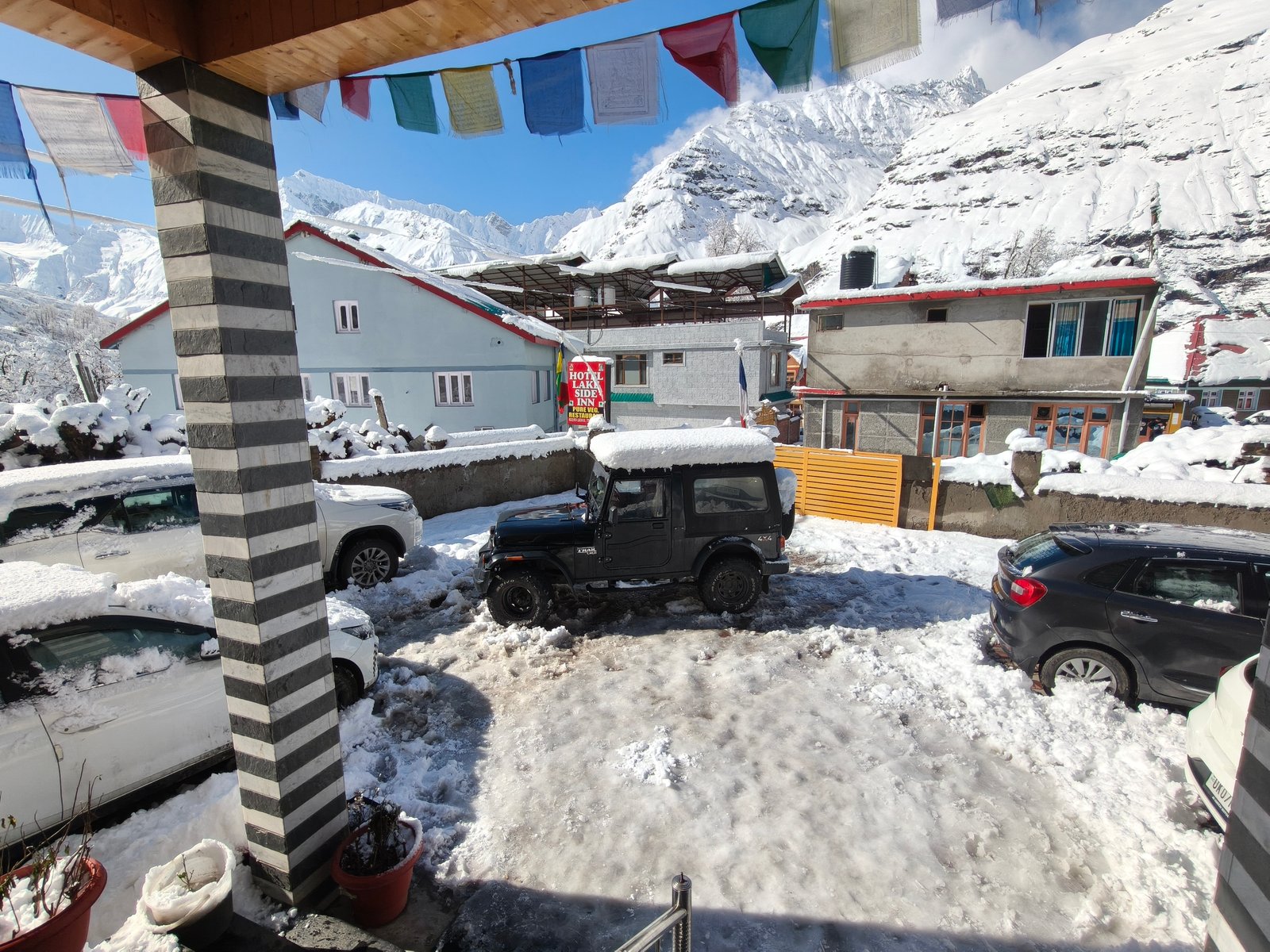
Halda is the main festival of Lahaul — a winter "festival of lights" in which villagers light bundles of cedar torches and gather to honour a local goddess and welcome the new year. It usually falls in mid-winter, on a day fixed each year by local lamas. Sissu sits in the heart of this Lahauli tradition.
Quick answer
Halda is the most important festival of the Lahaul Valley, where Sissu sits. It is a winter festival of fire and light: families prepare bundled torches of pencil cedar (a local juniper-like wood), light them after dark and carry them to a chosen communal spot, where the lit torches are brought together to honour a local goddess and to welcome the new year. The date is not fixed to the Western calendar — it is decided each year by Lahauli lamas and falls broadly in the January–February window, around the time of Losar. Because this is the heart of Lahaul’s winter, most travellers never see Halda; it is very much a festival for the people who live here.
What is the Halda festival?
Halda (sometimes written Halda or “Haldi” in casual transliteration, though it is unrelated to turmeric) is regarded as the principal festival of Lahaul. People sometimes compare its spirit to Diwali or to the Tibetan-Buddhist new year, Losar — a celebration of light, renewal and good fortune at the turn of the year. The torches that give the festival its name are the centre of it all: branches of pencil cedar are split into strips and tied into bundles to make a torch, also called a halda.
The festival is dedicated to a local goddess — commonly named Shashkin or Shashikar Apa, a deity associated in local belief with wealth and prosperity. As with many living Himalayan traditions, the exact name, story and observances vary from valley to valley and village to village within Lahaul, and you will hear them told slightly differently in Pattan, Gahar and the Chandra and Bhaga valleys. What is consistent everywhere is the meaning: Halda marks the local new year and carries a shared wish for luck, abundance and a good agricultural season to come. Sissu, on the banks of the Chandra river, sits squarely within this cultural world.
When is Halda celebrated?
Halda is a winter festival. It usually falls in the January–February period, broadly around the time of Losar, but there is no fixed calendar date. The day is set each year by local lamas and astrologers following the lunar reckoning, so it moves from one year to the next — and it can even be observed on slightly different days in different villages. For that reason we deliberately avoid quoting a single “Halda date” on this page; if you genuinely want to know the date for a particular year, the honest answer is to ask locally closer to the time.
The practical thing to understand is the season. Halda lands in the depth of Lahaul’s winter, when snow lies deep across the valley. That timing is central to why so few visitors ever witness it — more on that below. If you are simply trying to work out whether the valley is reachable, our guide on whether Sissu is open right now and the best time to visit Sissu will be more useful than chasing a festival date.
How it’s celebrated
The form of Halda is beautifully simple. In the days before, families gather pencil cedar and prepare the torches; in some villages the number of torches made reflects the male members of the household, though customs differ from place to place. After dark on the appointed day, each household lights its halda. People then carry the burning torches out from their homes and converge on a single chosen spot — a communal gathering place fixed by tradition — where the flames are brought together.
At that gathering there are prayers and offerings to the goddess, along with singing, traditional music and dancing. It is both a religious act and a community one: a whole village stepping out into the snow and cold of a winter night, light in hand, to greet the new year together. As with the worship of Lahaul’s mountain deities — the kind of living temple culture you can also read about in our piece on the Raja Gyephang temple — Halda is best understood as a sacred occasion rather than a performance, and outsiders who are present are expected to behave as respectful guests.
Other Lahaul festivals near Sissu
Halda is the headline, but Lahaul keeps a full calendar of festivals and fairs through the year. A few worth knowing:
- Losar — the Tibetan-Buddhist new year, widely observed across Lahaul and Spiti and closely tied in spirit to Halda. It usually falls in February and is celebrated over several days.
- Fagli (also called Kus or Kuns) — a late-winter festival in the Pattan valley marking the end of winter, known for masked dancers, torches and ritual bathing at the river confluence near Udaipur.
- Pori (Pauri) fair — one of Lahaul’s biggest fairs, held in summer (around August) at the Triloknath temple, which is revered by both Hindus and Buddhists. It blends pilgrimage with a great valley-wide gathering.
- Gochi (Gothsi) — a smaller, intimate festival in the Bhaga valley, celebrated by families who welcomed a baby boy in the past year, with blessings, local food and dancing.
These vary in scale and in how visible they are to outsiders, and as with Halda the dates of the religious ones are often set locally and shift year to year.
Can visitors experience these?
Honestly? It depends a great deal on the festival and the season. The winter festivals — Halda, Losar, Fagli — fall during the months when Lahaul more or less closes for winter. Heavy snow, limited services and the seasonal tourism break mean that very few travellers are even in the valley at that time, and most hotels in Sissu, ours included, are shut. So while Halda is the most important festival here, it is also one of the hardest for an outsider to attend — and it was never meant for tourists in the first place.
The summer fairs are different. The Pori fair at Triloknath, for instance, falls in August when roads through the Atal Tunnel are open and the valley is at its most accessible — that is a far more realistic occasion for a visitor to witness. If you do find yourself near any Lahauli festival, treat it as you would any sacred ceremony: ask before photographing people or rituals, dress modestly, follow local cues, and remember you are a guest at someone else’s celebration. For ideas on what is actually worth doing when you do visit, see our guide to things to do in Sissu, or simply get in touch and we’ll tell you honestly what’s happening around the time you hope to come.
Frequently Asked Questions
What is the Halda festival?
Halda is the main festival of the Lahaul Valley in Himachal Pradesh, where Sissu lies. It is a winter festival of fire and light: families make torches from pencil cedar, light them after dark and bring them together at a communal spot to honour a local goddess (commonly named Shashkin / Shashikar Apa) and welcome the new year.
When is Halda celebrated?
In mid-winter, broadly in the January–February window and around the Losar (Tibetan New Year) period. There is no fixed calendar date — the day is set each year by local lamas and astrologers and can differ between villages, so it shifts from year to year.
Why is Halda celebrated?
It marks the local new year and is an offering for luck, prosperity and a good harvest in the year ahead. The torches are lit and gathered together as a shared act of worship and renewal for the whole community.
Can tourists attend Halda?
Rarely. Halda falls during Lahaul’s deep-winter break, when most of the valley is snowbound, services are limited and hotels in Sissu are closed. It is a village community ritual rather than a tourist event, so very few visitors ever see it — and anyone present should behave as a respectful guest.
What other festivals are there in Lahaul?
Besides Halda, Lahaul observes Losar (the new year), Fagli (a late-winter masked festival in the Pattan valley), the summer Pori / Pauri fair at the Triloknath temple, and Gochi in the Bhaga valley. The summer fairs are far easier for visitors to witness than the winter festivals.
Is Sissu open during Halda?
Usually not. Halda coincides with Lahaul’s winter tourism break, when snow, road conditions and seasonal closures mean most of Sissu — including our hotel — is shut. Check our guide on whether Sissu is open right now before planning any January–February trip.
Make Sissu your home for a few days
Cosy mountain-view rooms, 24×7 hot water and a pure-veg kitchen — a 2-minute walk from Sissu Lake. Book direct for our best rate.