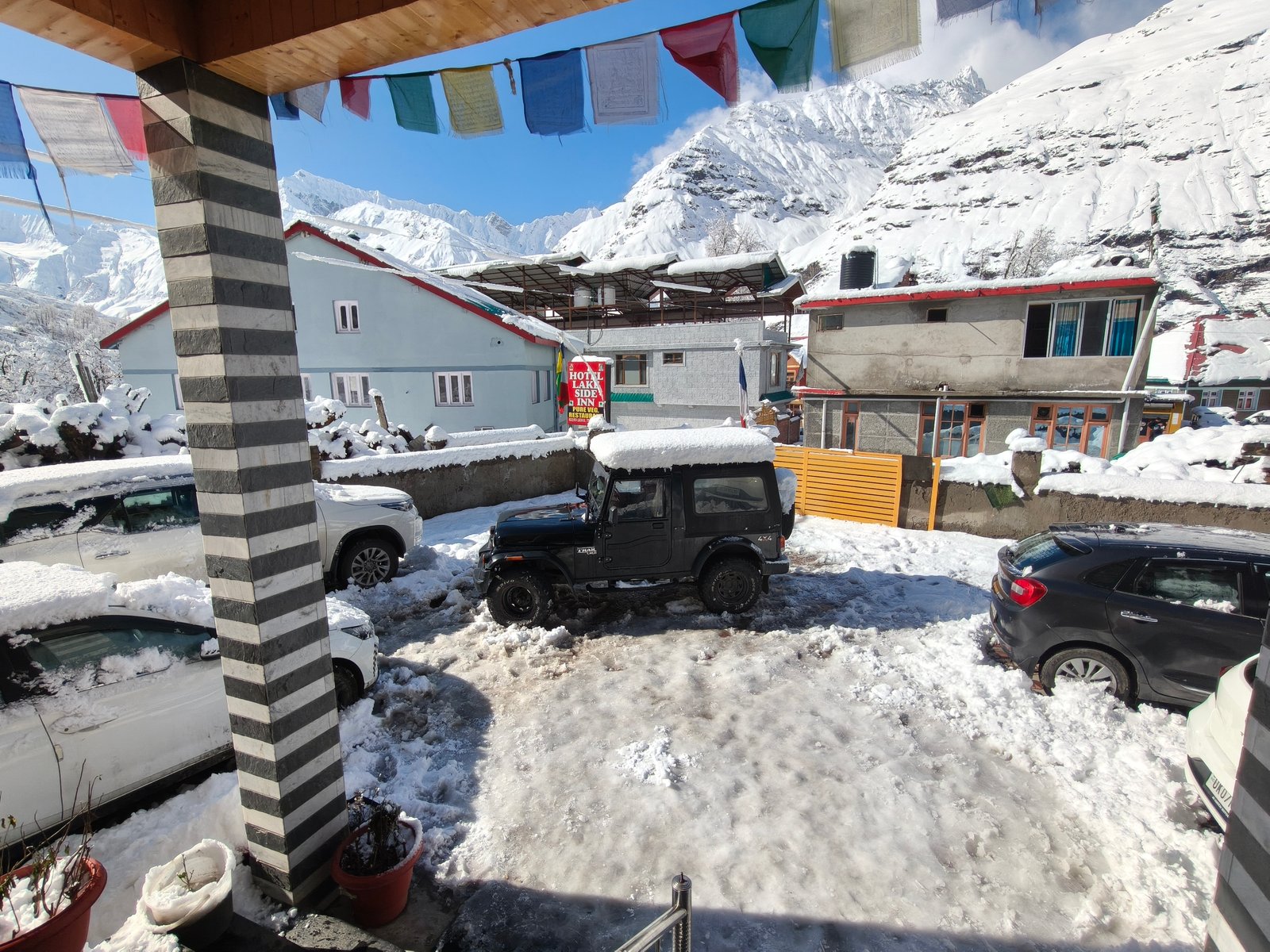
A Lahaul and Spiti tour from Manali starts with the easy drive through the Atal Tunnel into the Lahaul valley — where Sissu makes the ideal first base — and, in summer, continues over Kunzum La into remote Spiti. The full circuit needs about a week and the right season, while Lahaul alone is a shorter, year-friendlier trip. Below we break down the route, the stops, the season and how to build a plan that actually works — and we’re always happy to talk it through when you arrive.
Lahaul vs Spiti: what’s the difference?
People lump “Lahaul and Spiti” together because they share a district name, but on the ground they are two very different valleys — and knowing that shapes your whole plan. Lahaul is the green, glacier-fed valley you drop straight into from Manali the moment you clear the Atal Tunnel. It is close, comfortable and increasingly easy to reach, with Sissu, Keylong and Jispa strung along the river. Spiti is the high, arid, Tibetan-Buddhist cold desert well beyond it — reached only by crossing Kunzum La, and far more remote, higher and harder on the body.
So is it one trip or two? Both answers are valid. In summer, when Kunzum is open, you can join them into a single loop — Manali into Lahaul, then onward to Spiti and out via Kaza. Outside summer, Spiti is effectively cut off from this side and Lahaul stands on its own as a shorter, gentler journey. If you only have a few days, or you are travelling with children or older parents, Lahaul alone is often the wiser, more relaxed choice. Our Sissu vs Spiti comparison spells out the trade-offs in detail.
The route from Manali
Every Lahaul and Spiti tour from Manali follows the same opening move: the Atal Tunnel. This ~9 km tunnel burrows under the old Rohtang Pass, so instead of a slow, weather-hit mountain grind you get a quick, all-weather crossing. From Manali it is only about 38–40 km and roughly 1–1.5 hours to Sissu on the Lahaul side, with the tunnel’s north portal about 12 km short of the village. That single tunnel is the reason Lahaul went from “expedition” to “easy weekend” — see our how to reach Sissu guide for the full drive.
From Sissu the road runs deeper into Lahaul — past Tandi (the last fuel for a long way), through Keylong and on to Jispa. To reach Spiti you branch off before Keylong toward Gramphu and Batal, then climb the rough, high Kunzum La (~4,590 m) that divides the two valleys. Cross Kunzum and you descend into Spiti proper, following the Spiti river to Kaza. This Spiti leg is only passable in summer — the pass is snowbound and closed the rest of the year. Remember the golden rule: there is no petrol pump in Sissu, so fill up in Manali; the next reliable fuel is at Tandi, and you should tank fully there before any Spiti push.
Key stops along the way
The joy of this journey is that it strings together completely different landscapes in a couple of days of driving. Here are the stops that anchor most itineraries:
- Sissu (~38–40 km from Manali). Your natural first base in Lahaul — a lake, a waterfall and big valley views right off the tunnel, with proper hotels and hot food. The place to settle before you go higher.
- Keylong (~30 km on). Lahaul’s district town — markets, a couple of monasteries and the last real “town” comforts. Our Sissu to Keylong guide covers the short hop.
- Jispa (~50 km). A quiet riverside halt beyond Keylong, popular with those heading up the Leh highway.
- Chandratal (summer only). The stunning “moon lake” near Kunzum, usually reachable only from around June to October — see our Sissu to Chandratal route.
- Kaza / Spiti (~190–210 km, summer). The hub of Spiti and the gateway to Key Monastery, Kibber and the high villages. Our Sissu to Kaza guide lays out this long, high-altitude leg.
Between these anchors the drive itself is the attraction — glaciers, gorges and the river threading the whole valley together.
Best season for the tour
Season is not a detail here — it decides which trip is even possible. For the full Lahaul-plus-Spiti circuit you need summer, roughly June to October, when Kunzum La is clear and the Spiti road is open. That is the only window in which you can loop the two valleys together, and even then early June and October can be marginal at the pass, so build in a buffer day and check conditions before committing to the Spiti leg.
Outside that window the calculus changes. From about November into spring, Kunzum closes and Spiti is sealed off from this side — but Lahaul itself stays reachable through the Atal Tunnel, which is why a winter snow trip to Sissu is entirely doable while Spiti is not. In short: summer for the whole circuit, the colder months for Lahaul only. Our best time to visit Lahaul guide breaks the year down month by month so you can match your dates to your ambitions.
How many days you need
The single biggest planning mistake we see is trying to do Spiti in too few days — it is farther, higher and slower than the map suggests. As a realistic guide:
| Trip shape | Days to allow |
|---|---|
| Sissu & near Lahaul | ~2–3 days — lake, waterfall, Keylong, a short side trip |
| Lahaul + Chandratal | ~3–4 days (summer) — adds the high moon-lake day |
| Full Lahaul & Spiti loop | ~6–8 days — time to acclimatise and not just drive |
The extra days on the full loop are not padding — they are what keep you safe and comfortable at altitude. Spiti sits high, and rushing from Manali to Kaza in two days is how people end up unwell. Spend your first night or two low in Lahaul, at Sissu, to let your body adjust before you climb. Our how to plan a Sissu trip hub walks through the same logic step by step.
Using Sissu as your base
Whether you are doing Lahaul only or the full Spiti loop, we’d gently argue that Sissu is the smartest first base — and not only because we live here. It sits just beyond the tunnel, so you arrive relaxed rather than exhausted; it is low enough in the valley to help you acclimatise before any high push into Spiti; and it has the lake, the waterfall and easy walks right on the doorstep for a gentle first day. From here you can run day trips to Keylong and, in summer, stage the longer drives to Chandratal and Kaza.
At Hotel Lake Side Inn we are a family-run place a 2-minute walk from the lake and waterfall, with mountain-view rooms, 24×7 hot water, room heaters, a pure-veg kitchen and free parking — the warmth and hot food that matter a lot at 3,100 m before a cold, high onward drive. Our travel desk can help you line up local transport, sort a reliable driver for the Spiti leg and tell you honestly whether the passes are open for your dates — the kind of on-the-ground detail that keeps a big trip like this on track.
DIY vs a tour operator
Should you self-drive or book an operator? Both work — it comes down to your vehicle, your experience and your appetite for the high, rough roads. Doing it yourself gives you total freedom over pace and stops, and for the easy, tarmac run into Lahaul (Manali – Sissu – Keylong) it is genuinely straightforward in any decent car. The Spiti leg over Kunzum is a different animal: rougher surfaces, river crossings, thin air and long gaps between fuel and help, which is where a capable driver or an operator earns their keep.
Our honest take: keep it flexible. Handle the Lahaul portion independently if you like, and lean on local help — a hired driver or a small operator — for the demanding Spiti stretch, especially if you are not used to high-altitude mountain roads. We do not sell fixed tour packages or quote a set tour price, because a good Lahaul-Spiti trip depends entirely on your dates, group and route. What we can do is help with your stay and point you to trusted local transport. For anything specific — road status, a driver for the Spiti days, or building your plan — just call us on +91 82193 15303 or reach the travel desk, and we’ll give you a straight answer.
Frequently Asked Questions
How do I plan a Lahaul and Spiti tour from Manali?
Start by driving through the Atal Tunnel into Lahaul and basing yourself at Sissu (~38–40 km, ~1–1.5 hours from Manali). Explore Lahaul — Sissu, Keylong, Jispa — then, in summer only, continue over Kunzum La into Spiti toward Kaza. Allow about a week for the full circuit and travel between June and October, or keep it to a shorter Lahaul-only trip outside that season.
What is the difference between Lahaul and Spiti?
Lahaul is the green, glacier-fed valley you reach straight from Manali through the Atal Tunnel — close and easy. Spiti is the high, arid, Tibetan-Buddhist cold desert well beyond it, reached only by crossing Kunzum La and far more remote. They are often combined in summer, but Lahaul alone is a shorter, year-friendlier trip.
When is Spiti open from the Manali side?
The Manali-side route to Spiti runs over Kunzum La, which is generally open only from around June to October. In winter and spring the pass is snowbound and closed, so Spiti cannot be reached from Lahaul in those months — though Lahaul itself stays reachable through the Atal Tunnel year-round.
How many days do I need for a Lahaul and Spiti tour?
Allow about 2–3 days for Lahaul on its own, 3–4 days to add Chandratal in summer, and roughly 6–8 days for the full Lahaul and Spiti loop. The extra days on the full circuit matter for acclimatising to the altitude, not just for driving — rushing from Manali to Kaza is how travellers get unwell.
Is Sissu a good base for a Lahaul and Spiti trip?
Yes. Sissu sits just beyond the Atal Tunnel, so you arrive relaxed, and it is low enough in the valley to help you acclimatise before any high push into Spiti. With the lake, waterfall and easy walks nearby and day trips to Keylong and Chandratal, it makes an ideal first base before the longer, higher drives.
Should I self-drive or book a tour operator?
The easy Lahaul run into Sissu and Keylong is fine to self-drive in any decent car. The Spiti leg over Kunzum La is rough, high and remote, where a capable driver or operator is worth it. We do not sell fixed packages or quote a set price — call us on +91 82193 15303 and we will help with your stay and point you to trusted local transport.
Base your Lahaul & Spiti trip at Sissu
Mountain-view rooms a 2-minute walk from Sissu Lake — 24×7 hot water, heaters, a pure-veg kitchen and a travel desk to help plan your route. Book direct for our best rate.