Koksar is the first Lahaul village you reach after the Atal Tunnel’s north portal — a wind-blown cluster of dhabas beside a police check post and the Chandra river bridge, where nearly every traveller stops for a hot veg thali, a plate of Maggi and a glass of chai. It is a place to pause, not to sleep: from Koksar it is only about 14 km (~20 minutes) further along the valley to Sissu, which is where most people actually stay the night — and where Hotel Lake Side Inn sits, two minutes from the lake and waterfall.
Where Koksar sits on the road
Come out of the Atal Tunnel’s north portal and you drop into a wide, treeless valley — the Lahaul side, a completely different world from the pine forests you left behind on the Manali approach. The road curls down along the shoulder of the mountain and, after roughly 7–8 km, brings you to the Chandra river bridge at Koksar. This is the lowest, first proper habitation on this side, sitting at around 3,140 m on the valley floor where the old Rohtang road and the tunnel road meet.
Koksar has always been a threshold. In the days before the tunnel, when everyone crawled over Rohtang Pass, Koksar was the check post where Lahaul officially began — the first place to warm up, register, and steady your nerves after the pass. The tunnel changed the drive completely, but Koksar kept its old job: it is still where the valley greets you, still where the check post stands, and still where a line of dhabas waits with hot food. It is a stop by nature and always has been.
What to expect at Koksar
Do not arrive expecting a town. Koksar is small and functional — a working roadside halt, not a sightseeing village. Here is honestly what is there:
- A police / check post. Occupants of vehicles may be asked to note down details, especially in the shoulder seasons or when the road ahead has restrictions. Keep a government photo ID handy, though for Indian travellers no permit is needed to continue to Sissu.
- A cluster of dhabas. The main event. A handful of simple tin-and-tarpaulin eateries line the road, steam rising off the tea pans, serving the same reassuring hot food to everyone heading up or down the valley.
- The Chandra river and its bridge. The milky, fast Chandra runs right below, and the bridge is a natural photo stop — snow peaks in every direction, the river roaring underneath.
- Basic toilets and little else. There is no fuel pump, no ATM, no market to speak of. Koksar is a pause between the tunnel and the villages beyond.
- Sharp, changeable weather. It is exposed and windy; the temperature here can be several degrees colder than Manali, and cloud can roll in fast.
That is genuinely the whole of it — and that is the charm. You stretch your legs, eat something hot, take a picture from the bridge, and drive on.
The dhabas — what to eat
The Koksar dhabas exist for one reason: to feed cold, tired travellers coming off the mountain. The food is simple, hot, filling and almost entirely vegetarian — exactly what you want at 3,100–3,200 m. Typical fare across the stalls looks like this:
| Dish | What it is |
|---|---|
| Veg thali | Dal, a seasonal sabzi, rice, hot rotis — the standard hearty plate |
| Rajma-chawal | Kidney-bean curry over rice, the Himalayan road-trip classic |
| Maggi | Hot instant noodles, the unofficial fuel of every mountain halt |
| Aloo / plain paratha | Griddled flatbread with curd or pickle — good for the drive on |
| Chai & coffee | Endless glasses of hot, sweet tea — the real reason most people stop |
A few honest notes. Prices are a little higher than the plains — everything here is carried in, so that is fair. Portions are generous. Hygiene is basic roadside standard, so favour food that is freshly cooked and served piping hot. And if you keep a strict vegetarian or Jain diet, a plain thali, dal, rice or Maggi are safe, familiar choices. For a proper sit-down pure-veg meal later, our own kitchen and other options across the valley are covered in our pure-veg restaurant in Lahaul guide.
The drive from Koksar to Sissu
From Koksar it is a short, scenic run to Sissu — about 14 km that takes roughly 20 minutes in good conditions. You cross the Chandra and follow the valley-floor highway (this is the Manali–Leh road) with the river on one side and bare, striped mountains rising steeply on the other. Here is the shape of it:
- Cross the Chandra bridge at Koksar and rejoin the main valley road heading toward Keylong.
- Follow the river downstream (~14 km). The road is mostly good tarmac, with the occasional rough or waterlogged patch where streams cross — nothing dramatic in summer.
- Watch for the Sissu turn. The village sits just off the highway on the valley floor; you will see the tall waterfall on the far cliff and the flat green of the valley open up.
- Arrive in Sissu. The lake, the waterfall and Hotel Lake Side Inn are right here, a couple of minutes apart.
It is one of the easier stretches of this whole route — no high passes, no hairpins, just a gentle valley drive. For the complete journey from Manali including taxi, bus and self-drive options, see our how to reach Sissu guide.
Distances & times
| Leg | Distance (approx) | Approx time |
|---|---|---|
| Atal Tunnel north portal → Koksar | ~7–8 km | ~15 min |
| Koksar → Sissu | ~14 km | ~20 min |
| Manali → Sissu (via tunnel & Koksar) | ~38–40 km | ~1–1.5 hrs |
| Sissu → Keylong | ~30 km | ~1 hr |
When Koksar is snowbound
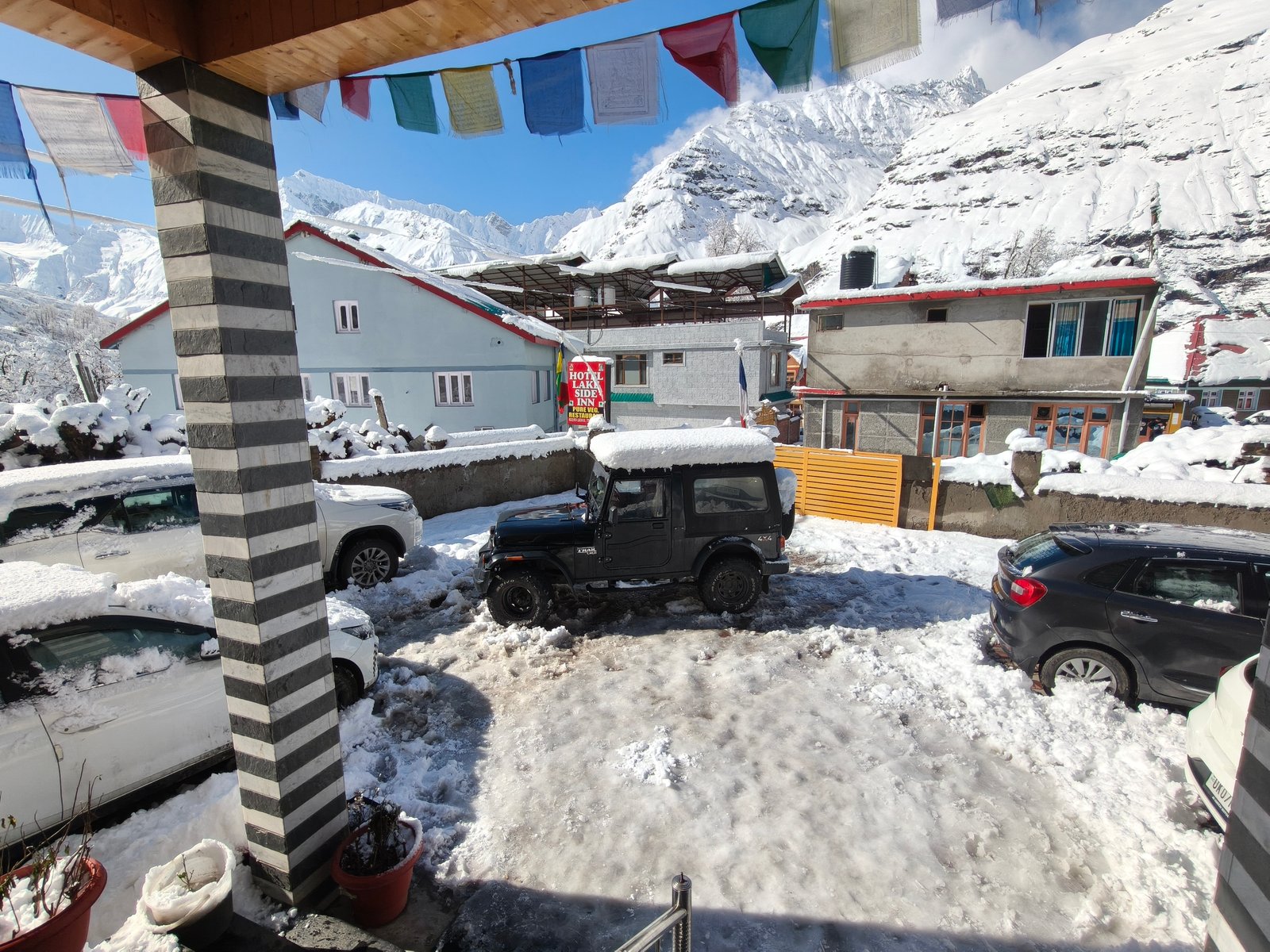
Koksar is exposed and high, so it feels winter early and hard. From roughly December to February the whole stretch can be under deep snow, with temperatures dropping to around −10 to −15°C on cold nights. The Atal Tunnel itself keeps the route open for far more of the year than the old Rohtang road ever did, but the open-air sections — the descent to Koksar and the run on to Sissu — still depend on the road being ploughed clear.
What this means in practice: after fresh snowfall the Koksar stretch may be temporarily held or single-lane while machines clear it, and the tunnel can close briefly for snow or maintenance. In deep winter, tourist movement in Lahaul is sometimes restricted altogether for a spell (roughly late January into February, around the Halda festival period) — dates vary year to year. If you are travelling between November and March, treat conditions as fluid: carry warm layers, start early, and message us before you set off so we can tell you exactly what the road is doing that morning.
Why sleep in Sissu, not Koksar
Almost everyone who stops at Koksar drives on to sleep, and the reason is simple: Koksar has next to no lodging, while Sissu, just 14 km on, is the valley’s first real hotel hub. The contrast is stark and worth planning around:
- Beds. Koksar is dhabas and a check post; Sissu has hotels, guesthouses and homestays. If you want a warm room with a heater and hot water, you want Sissu.
- Things to see. Sissu has its own lake and a tall waterfall right by the village — a genuine destination, not just a pit stop.
- Comfort at altitude. After the drive, a proper meal and a heated room help you rest and acclimatise. Our mountain-view rooms come with 24×7 hot water, room heaters and free parking, and a 100% pure-veg kitchen on site.
- A base for more. Sissu puts Keylong, Jispa, Gondhla and the road to Chandratal within easy reach for the next day.
So enjoy Koksar for exactly what it is — the valley’s welcome mat, a hot thali and a photo off the bridge — then carry on the short distance to Sissu, and let the day end somewhere warm.
Frequently Asked Questions
How far is Koksar from Sissu?
Koksar is about 14 km from Sissu, roughly a 20-minute drive along the valley-floor highway beside the Chandra river. Koksar is the first Lahaul village after the Atal Tunnel; Sissu, a little further on, is where most travellers actually stay the night.
What is there to eat at Koksar?
Koksar is known for its cluster of roadside dhabas serving hot, mostly vegetarian food — veg thali, rajma-chawal, aloo parathas, Maggi and endless glasses of chai. It is basic but warming, exactly what you want after coming off the mountain. For a proper pure-veg sit-down meal, carry on to Sissu.
Is Koksar the first village after the Atal Tunnel?
Yes. Coming out of the tunnel’s north portal into the Lahaul valley, Koksar is the first habitation you reach — about 7–8 km down, at the Chandra river bridge, with a check post and its dhabas. Sissu is the next major stop, roughly 14 km further.
Can you stay overnight in Koksar?
Realistically, no — Koksar has almost no lodging; it is a check post and eating halt rather than a place to sleep. Nearly everyone drives the short 14 km on to Sissu, which has hotels, guesthouses and homestays, plus a lake and waterfall.
When is the Koksar to Sissu road snowbound?
Heaviest snow falls December to February, when the open stretches around Koksar can be under deep snow and temperatures drop to around −10 to −15°C. The Atal Tunnel keeps the route open far more than the old Rohtang road, but fresh snowfall can still cause temporary holds or clearance delays. Confirm conditions before a winter trip.
Do I need a permit to cross Koksar to Sissu?
No special permit is needed for Indian travellers to pass Koksar and reach Sissu — just carry a valid government photo ID, as details may be noted at the check post. Foreign nationals follow standard rules; no inner-line permit is required for Sissu itself.
Stop at Koksar, sleep in Sissu
The dhabas at Koksar are a great pause — but the warm room, hot water and pure-veg dinner are 14 km on at Hotel Lake Side Inn, by Sissu Lake. Book direct.